
Sensu Lato - Dr. Greice Drumond
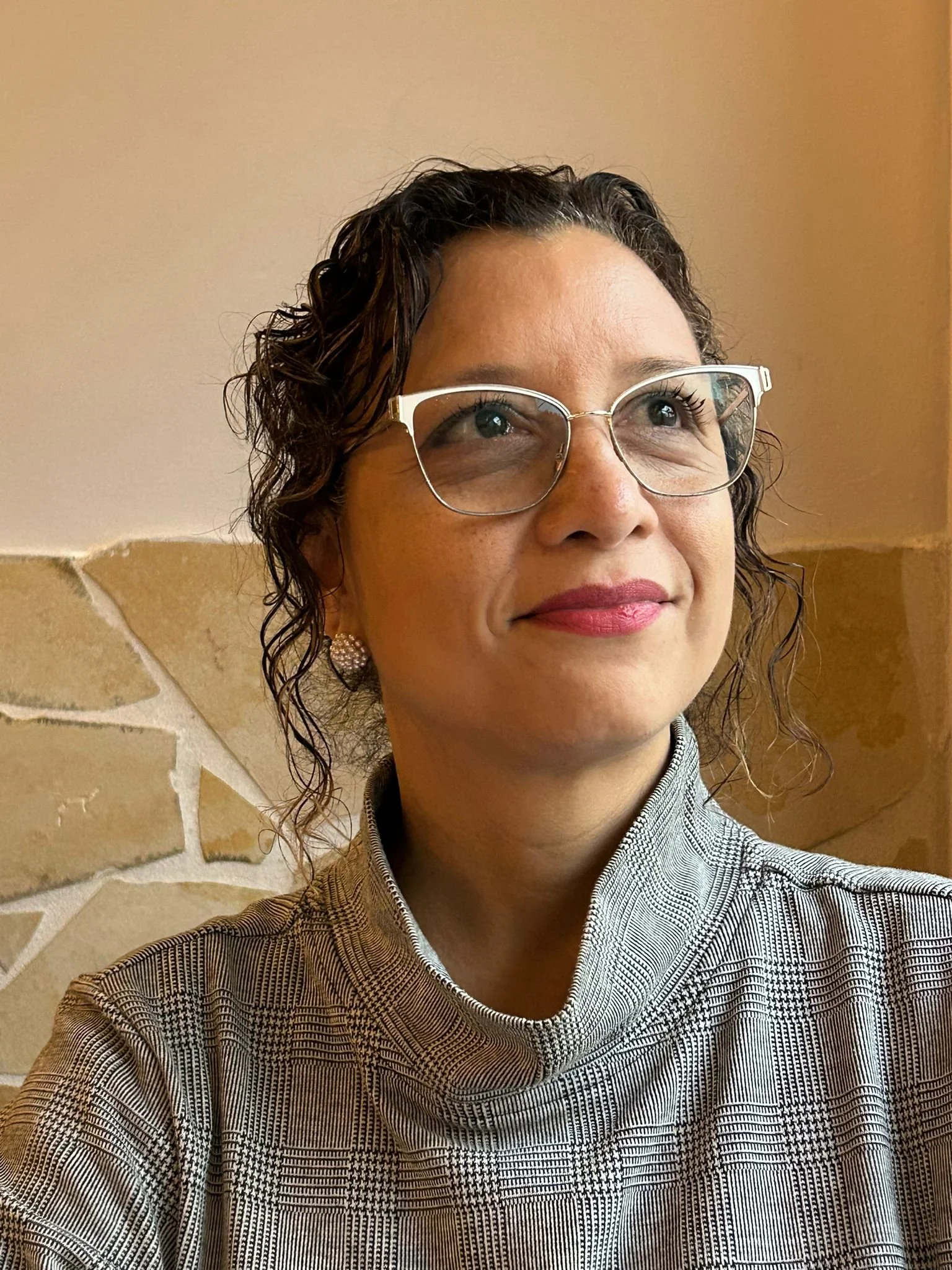
In this second entry to Sensu Lato, a series of interviews about ancient Greece, ancient Rome, and Latin America, Andrea Kouklanakis speaks with Dr. Greice Drumond. Dr. Drumond is an Associate Professor of Greek Language and Literature at the Institute of Letters at the Federal University of Fluminense (UFF) in Niterói, Rio de Janeiro. She is a member of the Laboratory of Classical Studies (LEC) at UFF and of the Brazilian Society of Classical Studies (SBEC). Her expertise is in Greek comedy, and she is the author of Comédia Grega Antiga: A Paz (2020). She is currently redirecting her research toward Greek literature of Late Antiquity, focusing on the 5th-century author Aelia Eudocia, who composed biblical centos from Homeric verses. Their conversation ranges from Biblical Scripture to Candomblé, and from Aristophanes to contemporary debates in Classics pedagogy.
Dr. Drumond, how did you become interested in Classics?
My path began when I was fifteen. I grew up in an evangelical family and eventually became a Sunday School teacher. My desire to understand Scripture led me first to Hebrew and then to Koine Greek. At that time, I imagined a life devoted to missionary work through my knowledge of these languages, but when I entered university at sixteen, everything changed. I spent most of my time in the library. Having grown up within a relatively narrow religious framework, I was suddenly exposed to multiple worldviews. My interests shifted toward Ancient History, Philosophy, and Literature, especially Homer, lyric poetry, and Greek theater. Nonetheless, that religious background first led me to ancient languages and, ultimately, to Classical Studies.

2 Corinthians 11:33–12:9. Ann Arbor University of Michigan P.Mich.inv. 6238 (Papyrus 46) fol. 142r-2 Corinthians
Could you say a few things about the classical tradition in Brazil?
Brazil has a long tradition in Classical Studies, initially shaped by the so-called dilettantes—wealthy lawyers, doctors, and even the Emperor Dom Pedro II himself—who studied Greek and Latin. The Catholic Church played a decisive role in institutionalizing the field in the 1930s, when many early professors came from seminaries.
Today, many universities offer Greek and Latin, though Latin is more widespread. In the past, both languages were taught in secondary education; today, they are largely confined to universities. Seminaries continue to teach them, however, and many graduate students come from Philosophy or History.
Since 2019, institutions such as the University of São Paulo (USP) and Rio’s Federal University (UFRJ) have introduced a third, interdisciplinary track focused on Reception Studies. However, the core of the Brazilian tradition remains grounded in translation and literary analysis. We do not typically produce critical editions as in Europe. Our foundational “classicists”—Odorico Mendes and Carlos Alberto Nunes—were translators, and access to antiquity in Brazil has historically been mediated by translation, commentary, and literary analysis rather than by philological editing.
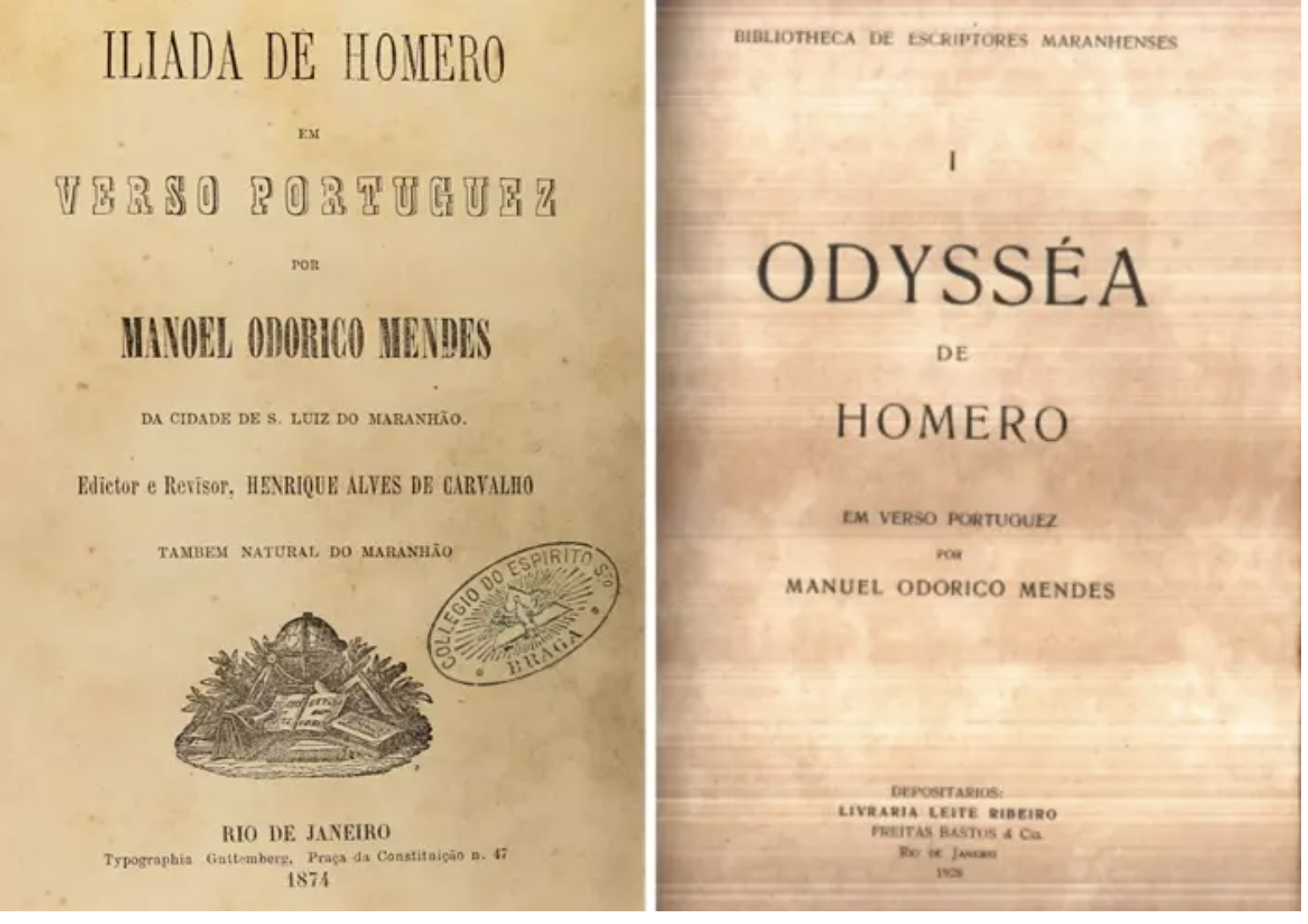
First edition of the first translation of Homer into Brazilian Portuguese by Manuel Odorico Mendes (1799 –1864 ).
You told me that you have also studied in Europe. Could you speak about this experience?
I had two key international experiences: a postdoctoral fellowship in Austria with Herbert Bannert and a postgraduate course at the British School in Greece. In Austria, I had to confront my internalized notion that Europe was the “true home” of Classics, and although my colleagues were generally welcoming, I often heard comments expressing surprise that Classics were studied in Brazil. In Greece, the academic environment felt quite hierarchical, and distinctions between “center” and “periphery” were more evident. These experiences led me to reflect critically on how the field of classics handled foreignness and other differences.
How does race shape the experience of being a classicist in Brazil?
The representation of Black scholars in Brazilian classical studies remains extremely low. My advisor was the only Black professor supervising graduate work in the field. This is striking in a country where Black and brown people constitute the majority of the population, yet the academy remains overwhelmingly white.
I myself identify as parda. According to the Census Bureau (IBGE) classifications,* “Black” includes both pardo and preto. While Brazil did not have formal segregationist laws, its history of whitening policies complicates racial identification. Proximity to whiteness still structures privilege. I personally did not encounter significant barriers entering academia because of passability or passing, but in recent years many pardos, myself included, have reclaimed a Black identity. This has important symbolic and political implications, especially for students who increasingly see themselves reflected in the field.

Source: Brazilian Institute of Geography and Statistic (Census)- https://www.ibge.gov.br/painel-cor-ou-raca/
Speaking of representation, this time in religious terms, do you or your students see connections between Yoruba traditions and Classical Studies?
Yoruba culture in Brazil is closely linked to Afro-Brazilian religions such as Candomblé and is deeply embedded in everyday practices. While no formal scholarly movement yet connects Yoruba traditions and Classics, such parallels often arise in the classroom. Students frequently compare Greek myths with Yoruba cosmologies, noting similarities in ritual, multiplicity, and symbolic structures. In many respects, Greek religious thought resembles African spiritual traditions more than Christianity. This dialogue is still emerging but holds significant potential.
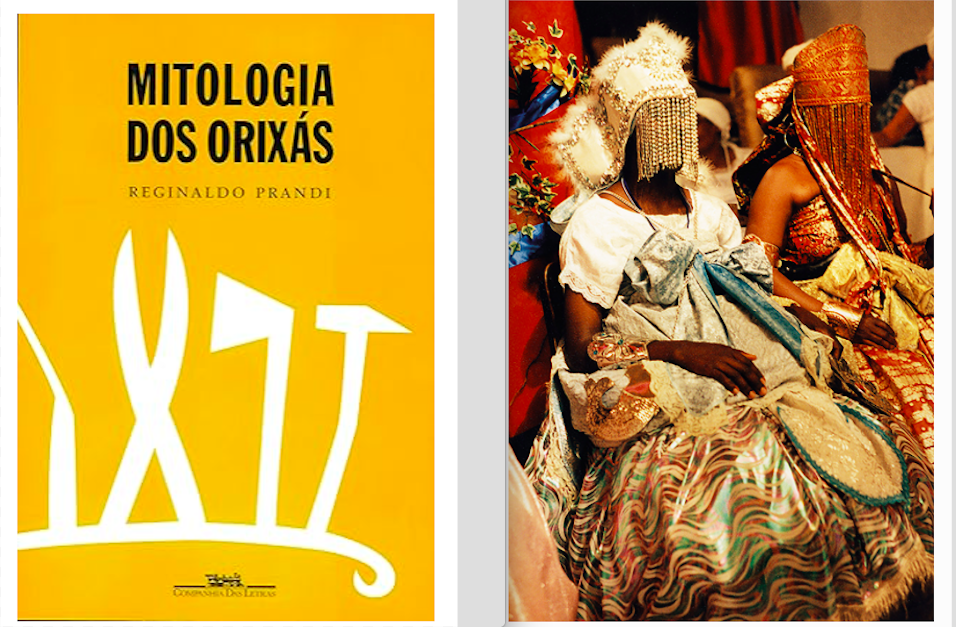
Reginaldo Prandi, Mitologia dos Orixás. Companhia das Letras, 2000. Fig. 65: Iemanjá Ogunté sitting with Iansã. Ilê Alaketu Axé Airá (temple of Alaketu), São Bernardo do Campo, São Paulo, 1998. Photo: Roderick Steel.
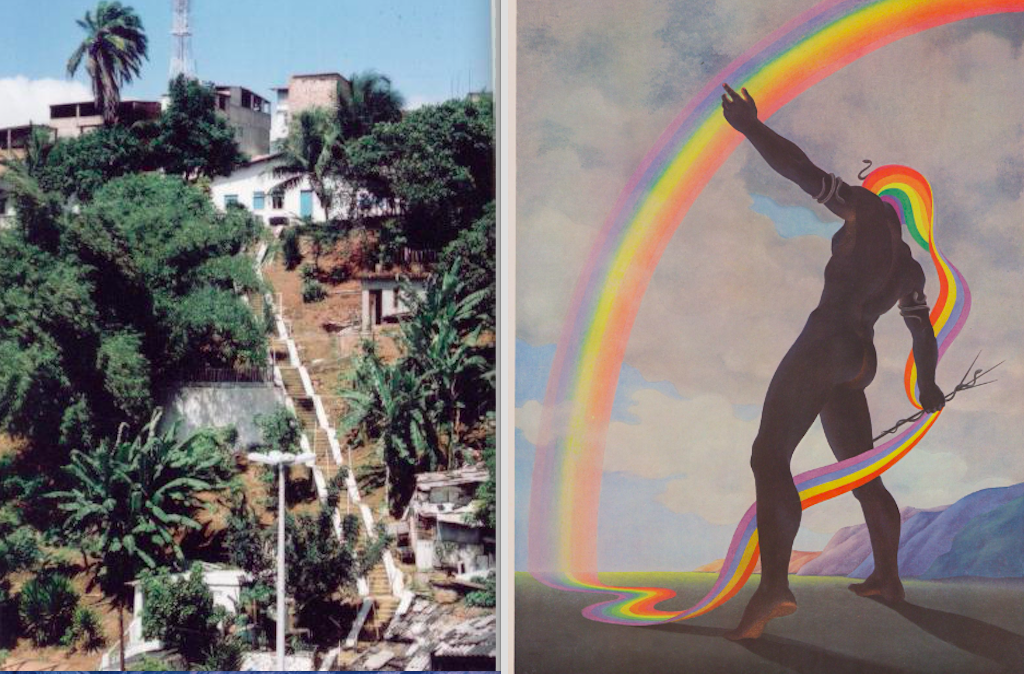
Left: Temple of Oxumarê, heritage site, Salvador, Bahia, Institute of ultural And Artistic Patrimony (IPAC). Right: “Oxumarê,” Nelson Boeira Faedrich (1912–1994), 1978. MARGS (Art Museum of Rio Grande do Sul), part of the artist's portfolio, "Gods of the African Pantheon: Orixás", published by Editora Globo of Porto Alegre, 1978 https://acervo.margs.rs.gov.br/acervo-artistico-2/oxumare-2/
Do the Classics have a social responsibility regarding diversity and inclusion?
Classical Studies must be socially responsible. During my post-graduate studies, debates around Martin Bernal’s Black Athena were pivotal. Whatever one thought of Bernal’s work, the intensity of Mary Lefkowitz’s rebuttal revealed the intense discomfort provoked by the idea of African or Near Eastern influence on Greece. For my part, Martin West’s broader, multicultural approach to Greek myth and literature aligned more with my thinking.
How do your social awareness and concern for inclusion inform your scholarly work?
My early work focused on Aristophanic comedy, which I find compelling because it foregrounds ordinary people rather than elites. My MA thesis focused on translating Aristophanes’ Peace, which was later published, and in my doctoral research I examined the transition from the fifth to the fourth century BCE, a period marked by Athens’ reassessment of democracy after the Peloponnesian War, a historical process with some contemporary resonance. Eventually, I developed a translation of Aristophanes that could reach more people, be more accessible, and be more humorous, in contrast to my earlier, more formal style. My goal has been to democratize access to Classical texts.
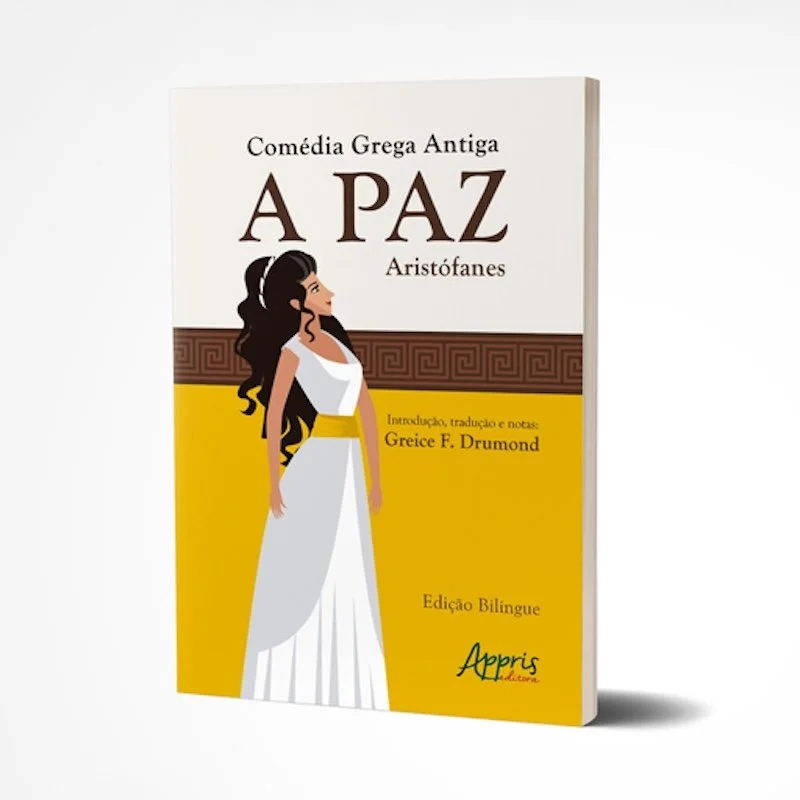
Greice F. Drumond, Comédia Grega Antiga — A Paz, Aristófanes: Introdução, tradução e notas. Edição Bilíngue. Curitiba: Appris, 2020
My most recent project centers on Aelia Eudocia, a fifth-century author who composed biblical centos from Homeric verses. She was influential, later exiled, and largely forgotten. I approach her work as that of a Greek-language author who reactivates and transforms the legacy of earlier classical literature. By translating her work into Brazilian Portuguese, I seek to help recover such historically marginalized figures.
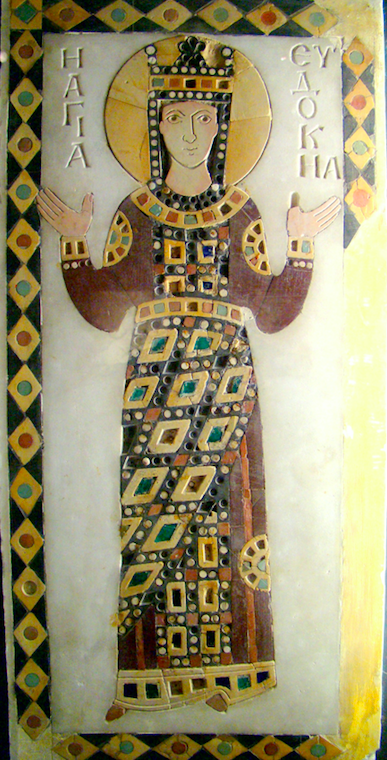
Aelia Eudocia. “Eudocia in an 11th-century colored stone inlay on marble from the church of Lips monastery (Fenari Isa Mosque), Fatih, Istanbul. Archaeological Museum
How does this democratizing goal fit into your classroom practice?
Decolonial and feminist perspectives, along with my students’ lived experiences, have transformed my teaching. Today, it would be impossible to teach Classics without addressing gender, race, violence, and power. Otherwise, the field risks becoming fossilized. An intermediate phase of my research focused on pedagogy. Works such as Pedagogy and Power: Rhetorics of Classical Learning and From Abortion to Pederasty: Addressing Difficult Topics in the Classics Classroom shaped my thinking: the former deepened my understanding of how Classics historically formed elite identities, while the latter situated my work within contemporary debates about the discipline’s social role. Questions students raise—on slavery, race, and representation—open pathways to deeper historical inquiry.
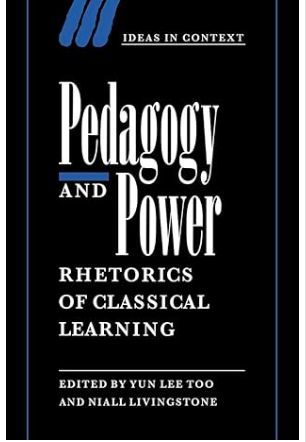
Yun Lee Too and Niall Livingstone (eds.). Pedagogy and Power: Rhetorics of Classical Learning. Cambridge University Press, 2009
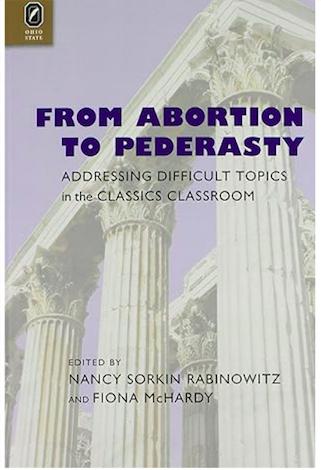
Nancy Sorkin Rabinowitz, Fiona McHardy. From Abortion to Pederasty: Addressing Difficult Topics in the Classics Classroom. The Ohio State University Press, 2014
Could you say a few things about Black movements and their connection to Classical tradition and reception in Brazil?
Brazil has a rich tradition of engaging Classical material through Black cultural production. For example, Vinícius de Moraes’s Orfeu da Conceição (1954) merges Classical myth with Black identity, while Chico Buarque’s Gota d’água (1977) reimagines Medea as a woman rooted in Afro-Brazilian religiosity on the urban periphery. The Black Experimental Theater (TEN) in the 1940s also staged Classical works as part of a broader cultural movement.
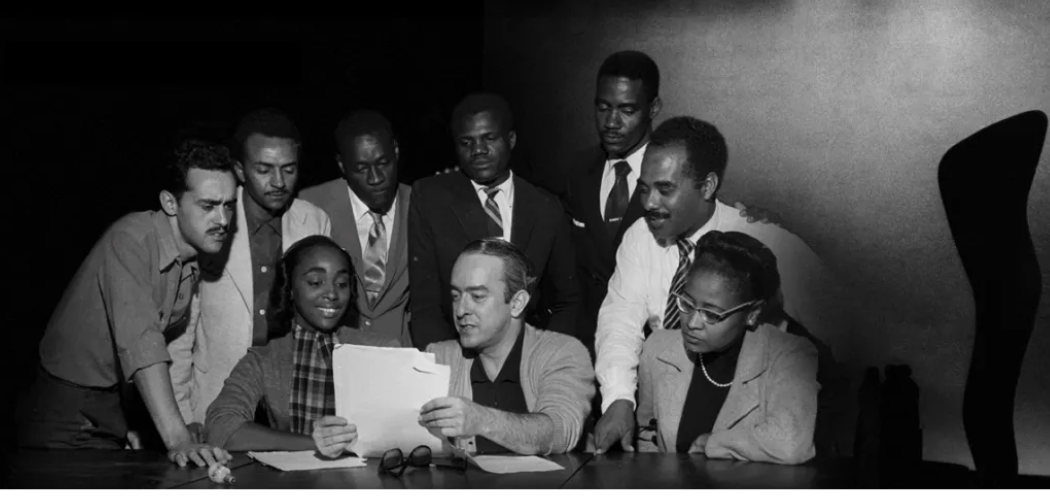
Cast of actors in Abdias do Nascimento’s Black Experimental Theater (Teatro Experimental do Negro, or TEN, as it is known) meeting with the playwright Vinicius de Moraes for the theatrical production of “Orfeu da Conceição.” Based on Orpheus and Eurydice, it was written in 1954 and first shown in 1956 at the Municipal Theater in Rio de Janeiro. Antônio Carlos Jobim wrote the play’s soundtrack, with lyrics by Vinicius de Moraes, and Oscar Niemeyer designed the set. The 1959 French-Brazilian film “Black Orpheus” was based on Moraes’ play.
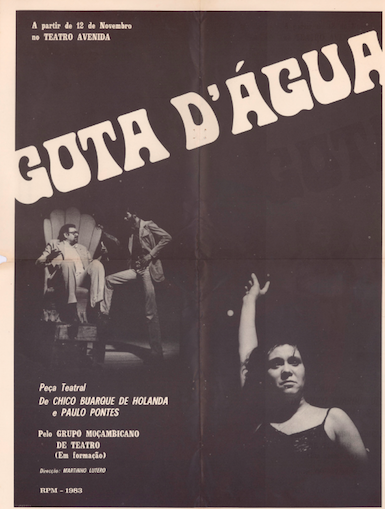
“Gota d’Água” is a Brazilian play written by Chico Buarque de Holanda and Paulo Pontes in 1975, with music by Chico Buarque. It is an adaptation of Euripides’s Medea, set in a housing complex in Rio de Janeiro.
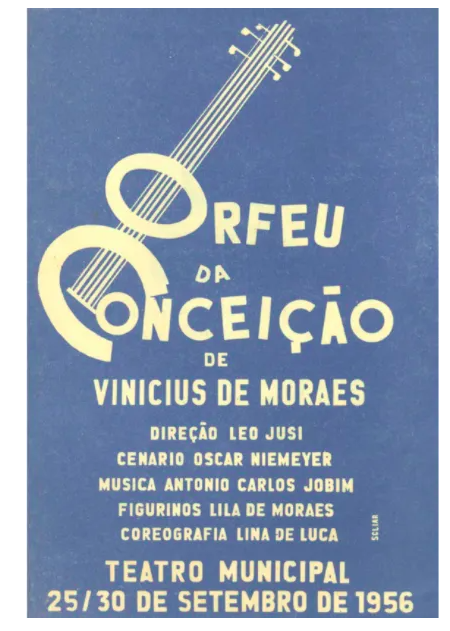
Poster for the 1956 production of “Orfeu da Conceição”
Who has influenced your thinking in a significant way?
Thinkers such as bell hooks have influenced my teaching by emphasizing the need to move beyond Eurocentric frameworks. Understanding the historical context of earlier scholars and texts such as her 1994 book Teaching to Transgress: Education as the Practice of Freedom helps us avoid reproducing exclusions. The same is true of Paulo Freire’s Pedagogy of the Oppressed, first published in Portuguese in 1968 and widely translated worldwide.

Any final reflections?
I am optimistic about the future of Classical Studies in Brazil. Policies such as affirmative action and expanded extension programs are transforming the field. Universities must move beyond their “crystal palace” and engage with society more broadly. The increasing diversity of students will reshape the discipline, bringing new questions and new perspectives.
Dr. Drumond, thank you very much.
Note:* IBGE stands for Instituto Brasileiro de Geografia e Estatística, that is, the National Census Bureau.